We resurrected a heat-recovery ventilation unit dead for 3 years (killed by a drowned remote control)
20 May 2026 · 4 min
#gtb,#cvc,#distech-controls,#ecy-650,#retrofit
Hello BMS folks! 👋
Today I’m not telling you a tutorial, but a job-site story. The kind that ends well, but with a little scare in the middle — because that’s the real job.
The setting: a big heat-recovery ventilation unit (VMC double flux), on the roof of a school building. Except this machine had been asleep for three years. Unplugged. Abandoned. A fine beast at a complete standstill.
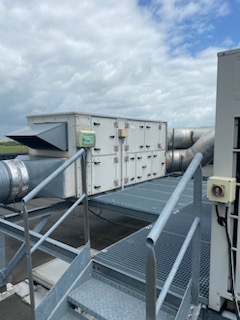
And you know what killed this installation for three years? Hold on tight…
The culprit: a remote control that took on water 💧
There it is. Not a burnt-out motor, not a clogged exchanger, not a power board gone up in smoke. No. A simple remote control, the little proprietary controller that ran everything, which took on water and gave up the ghost.
And since it was proprietary hardware, no easy spare part, no obvious solution. Result: instead of tinkering, they gave up. The whole machine, shelved. Three years. For a remote control.
It’s exactly the kind of thing that makes me grind my teeth: a complete installation, tens of thousands of euros of HVAC equipment, knocked out by a €200 proprietary box that became impossible to find. The lesson is already there, but we’ll come back to it at the end.
Starting from scratch 🔧
No half measures. We did a complete renovation, starting from a blank sheet:
- ✂️ Removal of all the old proprietary controls. Out with the cursed box.
- 🕵️ Tracing and full rewiring: sensors, pressure switches, dampers, motors… we retraced everything, wire by wire. It’s the thankless work, the kind you don’t see in photos, but it’s 80% of the job on a retrofit. When you land on an installation nobody has documented in ten years, you’re a bit of an archaeologist.
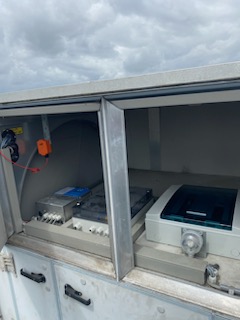
The new brain: a Distech ECY-650 🧠
To run all this, we installed a Distech Controls ECY-650 controller. Solid, communicating, standard — no more proprietary lock-in.
And on the operations side, we took care of ergonomics with two screens:
- 🖥️ A built-in screen on the roof, right next to the machine, for on-site interventions. You climb up, everything is in front of you next to the AHU.
- 🖥️ A remote touchscreen in the technical room, to run things in the warm without getting rained on up on the walkway. Because adjusting settings on your knees on a windy roof in the middle of winter is funny for about two minutes.
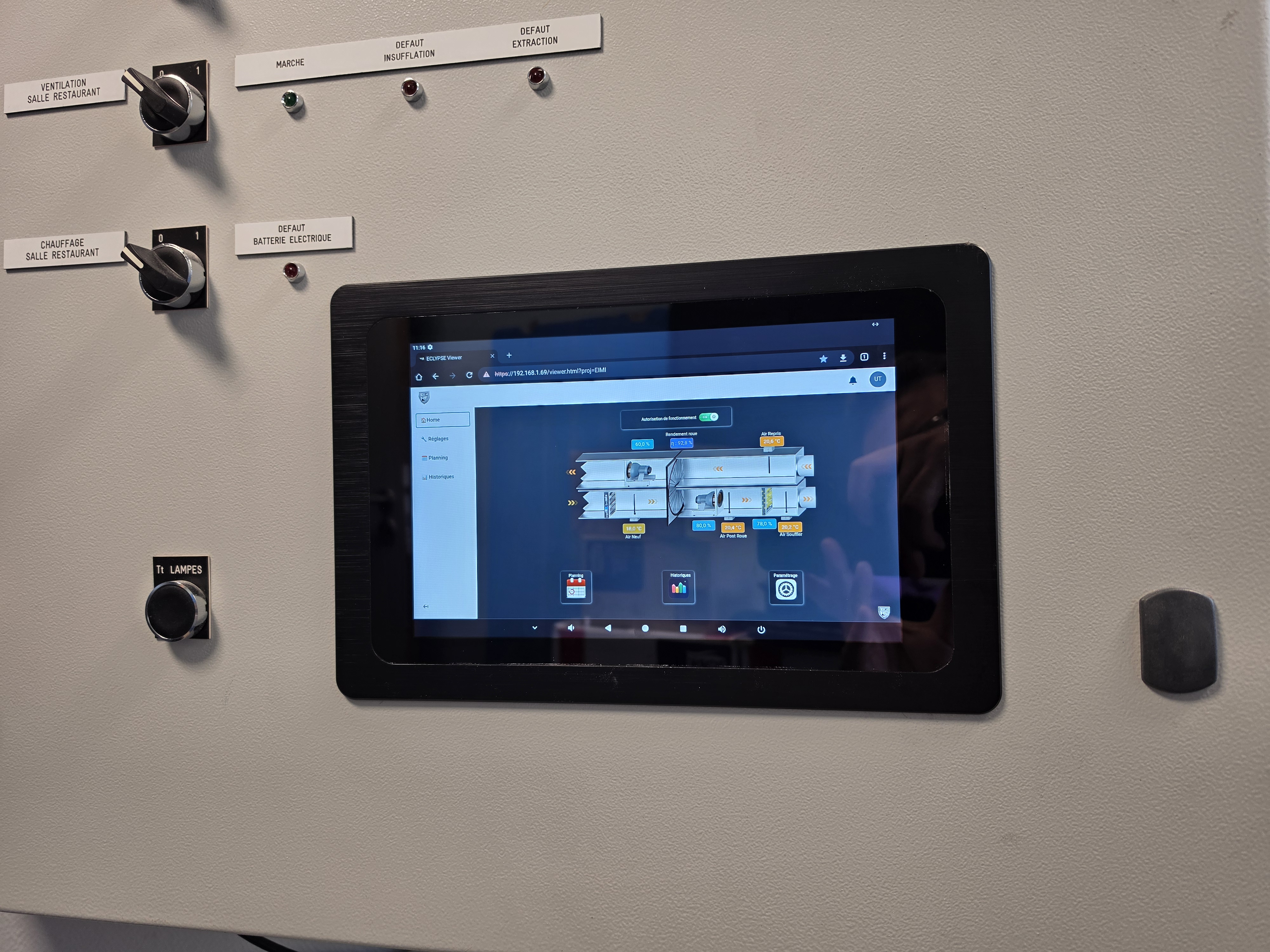
Note the nicely old-school switches and lights on the panel (Ventilation, Heating, Supply fault, Extract fault, Electric heater fault) — we keep the comfort of the physical panel, but behind it, everything is driven and reported by the controller.
The moment of truth: the restart ⚡
Let’s be honest: this is THE moment where you clench.
Three years of inactivity. Motors that haven’t turned in ages, bearings that may have absorbed moisture, capacitors that may have dried out… We had taken every electrical measurement possible beforehand (insulation, continuity, we check everything that can be checked before sending the juice), but at some point you have to press the button and cross your fingers.
We hold our breath. We start.
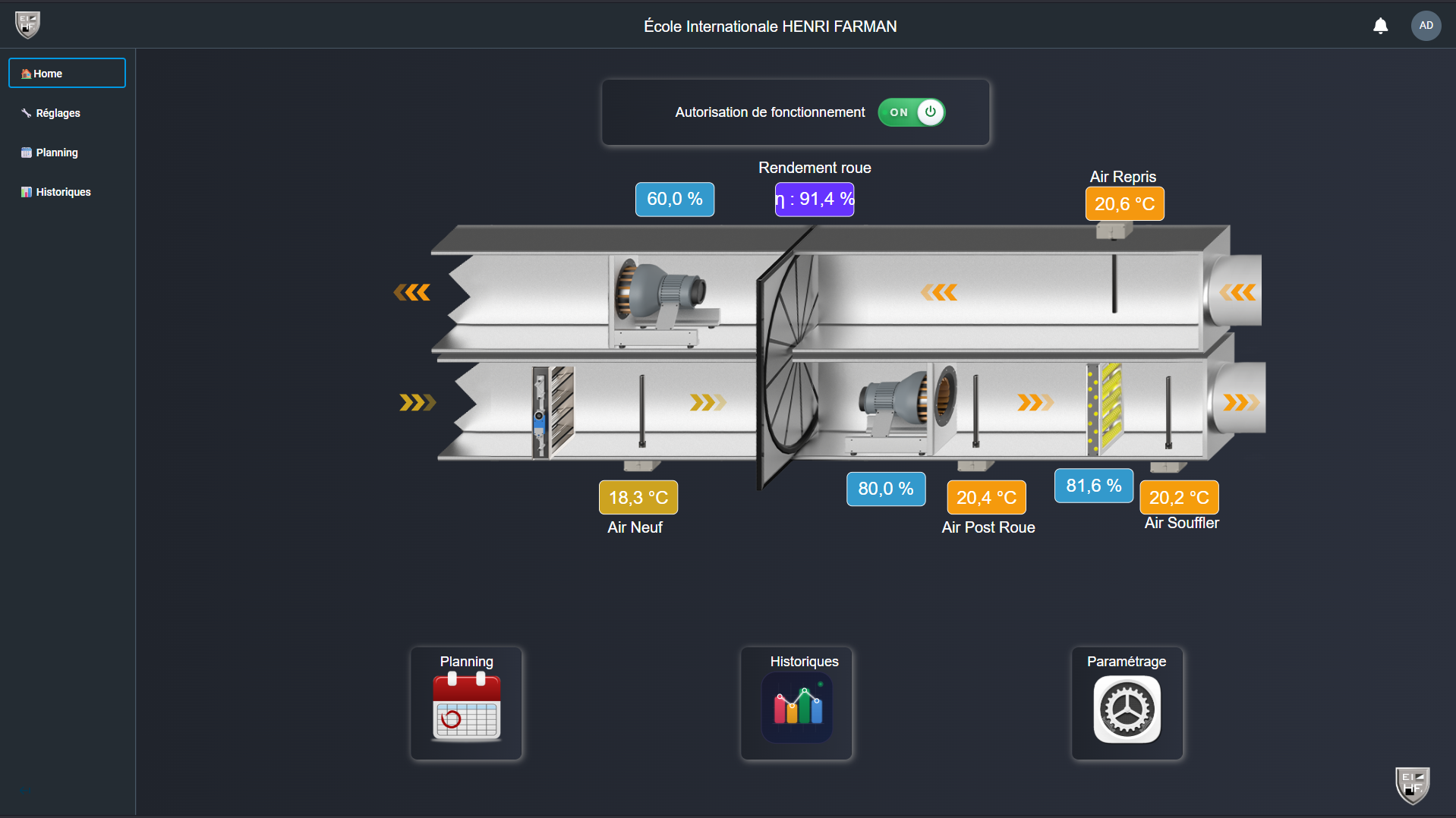
And then… miracle: the motors start right up! 🔄 Supply, extract, the wheel turning, the exchanger doing its job. The supervision schematic comes alive, temperatures climb. Total bliss.
Except… field reality always catches up with you 💥
Thought it would be too good to be true? Me too.
The electric heating coil did not appreciate its three years of humidity. Despite all our vigilance, oxidation had silently done its work. On the first real start in heating, a connector failed and one of the heating stages gave up the ghost. 🔥
And this is where supervision shows its usefulness. On the schematic you see a heating command above 80%… but a supply temperature that barely moves. 😉 To a trained eye, the diagnosis jumps out: if you push heating to the max and the air barely comes out warmer, a stage is dead. Without supervision, you’d have searched for hours. Here, it’s written black on white on the screen.
The moral of the retrofit 🛠️
That’s everyday retrofit life: wins and surprises to handle live. You can take every measurement in the world, every precaution, the field always has a little surprise for you. What matters is to see it, understand it, and absorb it.
In the end, the outcome is clear:
- ✅ An installation saved from scrap, after three years of downtime.
- ✅ Communicating, open controls (no more proprietary box that takes on water and blocks everything).
- ✅ A machine operational again, operable from the roof AND the technical room.
- ✅ A heater fault immediately diagnosed thanks to supervision.
And the real lesson of the story? A complete installation almost went to the dumpster because of one proprietary box that became impossible to find. Standard and communicating isn’t an integrator’s luxury: it’s what makes a machine repairable in ten years instead of condemned by a part you can no longer find.
Anyway. A resurrected ventilation unit, a heating stage to replace, and a good day on site.
See you next time 🛠️
#GTB #BMS #CVC #DistechControls #Retrofit #VMC
$ gtb react
Did this article resonate?
$ gtb comments --tail
Comments
// loading…